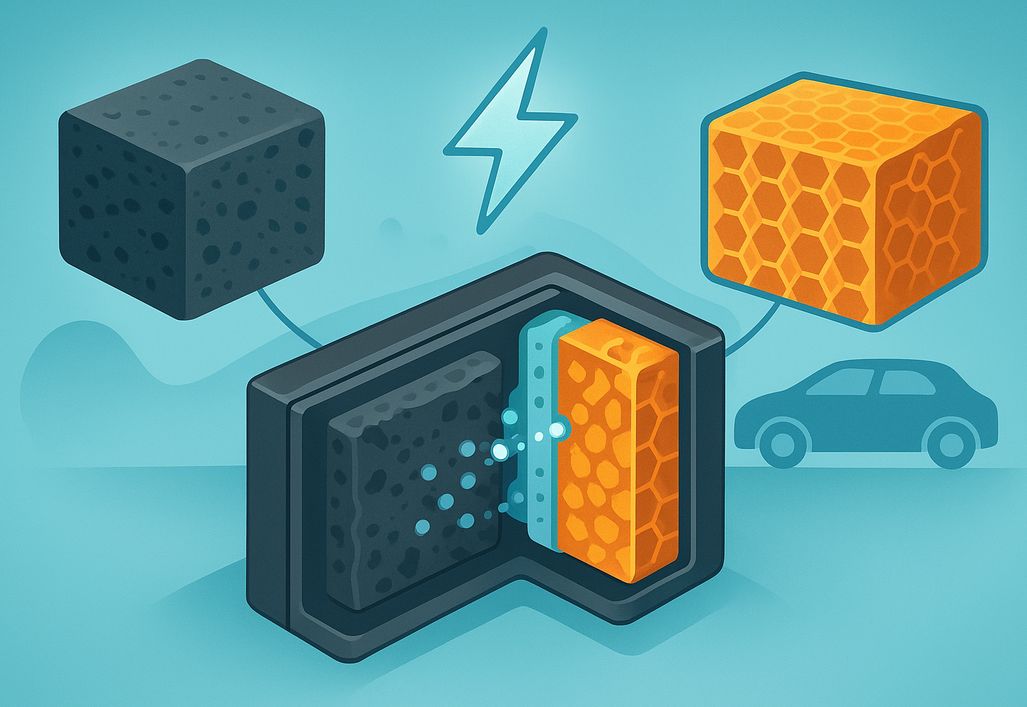
Lithium-ion batteries have become the backbone of modern electronics, powering devices from smartphones to electric vehicles. Their energy density, reliability, and rechargeability make them indispensable. However, the demand for longer-lasting, faster-charging, and safer batteries continues to grow as technology advances. Researchers are now focusing on improving the core components: anodes and cathodes.
Anodes and cathodes directly influence battery capacity, lifespan, and stability. Traditional graphite anodes and lithium-cobalt oxide cathodes have served well but face limitations. Graphite anodes, for example, offer moderate energy density and are prone to degradation over multiple cycles. Similarly, conventional cathodes can suffer from thermal instability and capacity fade.
Recent studies and industry innovations suggest that new materials could redefine lithium-ion technology. Silicon-based anodes, lithium-metal alternatives, and high-nickel cathodes promise higher energy density and longer life. These advancements aim not only to enhance performance but also to address sustainability concerns, reducing reliance on cobalt and other scarce elements.
Current Limitations of Lithium-Ion Batteries
Despite their widespread adoption, lithium-ion batteries face notable limitations. Energy density, cycle life, and safety remain critical concerns. Most commercial batteries rely on graphite anodes and lithium-cobalt oxide cathodes, which restrict overall capacity. Graphite can store only about 372 mAh/g, limiting total energy output.
Cycle degradation is another major challenge. After hundreds of charge-discharge cycles, batteries lose significant capacity. This reduces lifespan and affects the reliability of electric vehicles and consumer electronics. Thermal instability is also a concern; lithium-ion batteries are prone to overheating under high loads, raising safety risks.
Material scarcity adds to the problem. Cobalt, a key component in traditional cathodes, is expensive and subject to ethical mining concerns. Nickel-rich cathodes increase capacity but may compromise stability. Meanwhile, graphite sourcing can be environmentally taxing.
Addressing these limitations requires novel anode and cathode designs. Researchers are exploring silicon-based anodes, lithium-metal alternatives, and advanced cathode chemistries. These innovations aim to improve energy density, enhance cycle life, and reduce reliance on scarce materials, setting the stage for next-generation batteries.
Emerging Anode Materials
Silicon-based anodes are at the forefront of lithium-ion innovation. Silicon can store nearly ten times more lithium than graphite, offering a potential energy density boost. However, silicon expands significantly during charging, leading to mechanical stress and rapid capacity loss. Researchers are developing silicon-graphite composites and nanostructured silicon to mitigate these issues.
Lithium-metal anodes present another breakthrough. They offer higher capacity and lower weight than graphite. But dendrite formation during cycling poses safety hazards, potentially causing short circuits. Advanced electrolytes and protective coatings are being explored to stabilize lithium-metal anodes for commercial use.
Other alternatives include tin, phosphorus, and transition-metal oxides. These materials show promise in lab settings, providing higher capacity and improved cycling performance. Yet, large-scale implementation remains challenging due to stability and cost constraints.
The development of next-generation anodes aims to increase energy density, extend cycle life, and ensure safety. These improvements are crucial for electric vehicles, grid storage, and high-performance electronics, driving the future of lithium-ion technology.
Innovations in Cathode Materials
Cathode materials dictate battery voltage, energy density, and stability. Conventional lithium-cobalt oxide cathodes provide reliable performance but face limitations in cost and safety. High-nickel NMC (Nickel-Manganese-Cobalt) and NCA (Nickel-Cobalt-Aluminum) cathodes offer higher energy density but may suffer from thermal instability.
Researchers are exploring cobalt-free cathodes, such as lithium iron phosphate (LFP), which offer longer life, improved safety, and lower cost. LFP batteries are increasingly used in electric vehicles, especially in China, where energy storage solutions prioritize stability and affordability.
High-voltage spinel and lithium-rich layered oxides are also emerging. They promise higher capacity but require specialized electrolytes to maintain stability. Innovations in surface coatings, doping, and nano-engineering enhance cathode performance while reducing degradation.
Ultimately, these advancements in cathode chemistry aim to balance energy density, safety, and sustainability. Improved cathodes, combined with next-generation anodes, could revolutionize battery performance for all sectors, from transportation to grid storage.
Conclusion: Implications for the Future
Advancements in anode and cathode materials are transforming lithium-ion technology. Silicon and lithium-metal anodes, alongside high-nickel and cobalt-free cathodes, promise higher energy density, longer lifespan, and improved safety.
These innovations support the growing demand for electric vehicles, renewable energy storage, and high-performance electronics. They also reduce reliance on scarce and costly materials, enhancing sustainability.
The future of lithium-ion batteries will depend on the successful integration of these new materials. Continued research, industrial scaling, and innovation in electrolytes and battery design will define the next generation of energy storage.
The evolution of anode and cathode materials represents a critical step toward safer, longer-lasting, and more efficient batteries. For consumers, manufacturers, and policymakers, these advancements offer exciting opportunities to reshape energy use globally.